Version Control Failures in Multi-Party Contract Redlines
Teams must track every draft version to prevent unsigned-edits from locking into binding contracts.
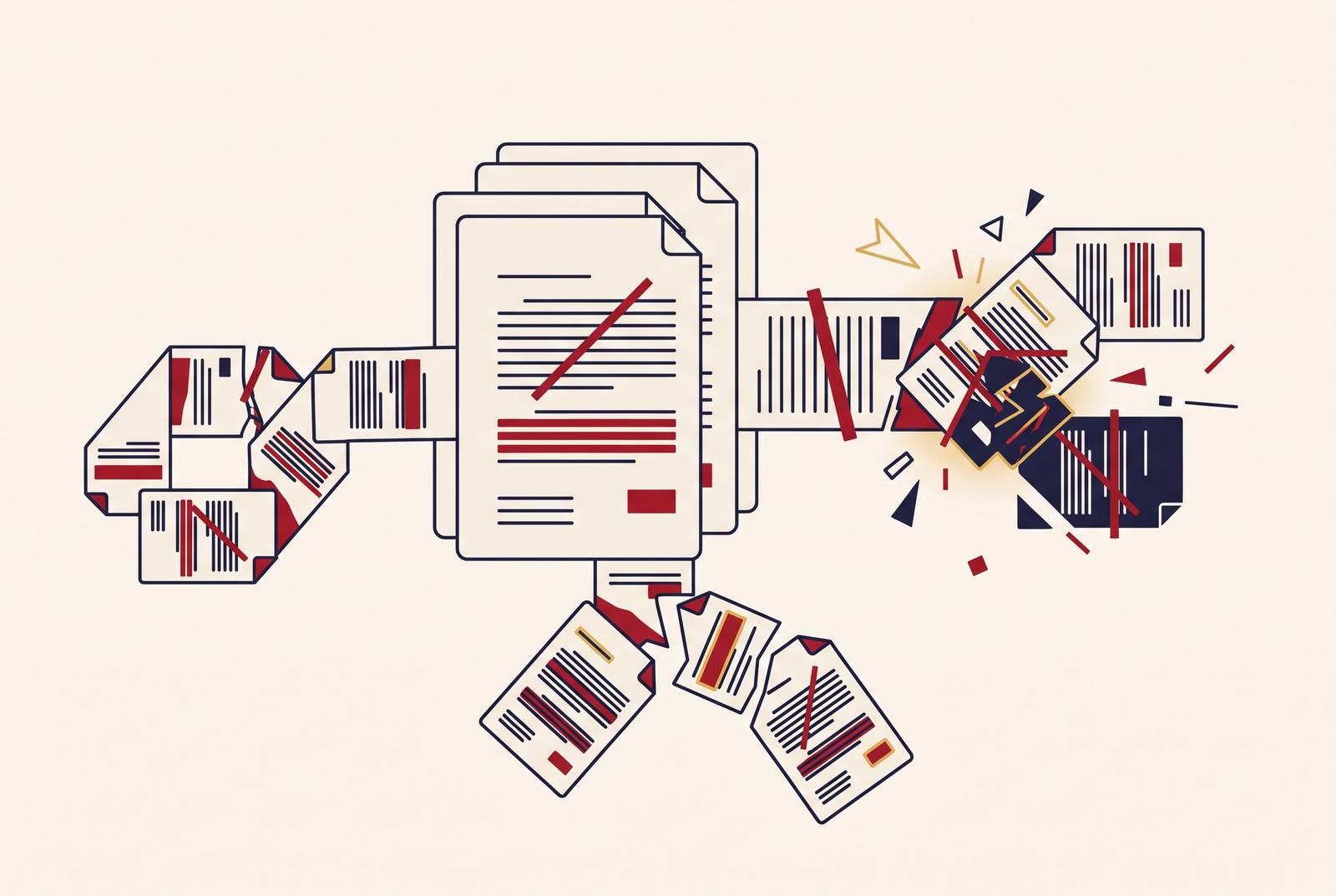
Version control failures in multi-party contract redlines follow a script. The names change, the clause changes, but the mechanism doesn't: documents multiply, edits go unnoticed, and someone eventually signs a version nobody agreed to.
Redlining itself is old news, conceptually. One side proposes changes, the other side responds, and the document moves back and forth until the language settles. The name comes from actual red ink on actual paper, back when lawyers marked up physical drafts with a pen. Today it happens almost entirely in Word's track changes feature or inside a contract lifecycle management (CLM) platform, but the underlying logic hasn't shifted much: propose, respond, converge.
Two parties negotiating this way is already a little precarious. Add a third or fourth party and the fragility doesn't just increase, it multiplies, because each new party brings another inbox holding a slightly different copy of the document, another reviewer who may or may not know which draft is actually live, and another opportunity for two sets of edits to collide without either side noticing. Negotiations rarely happen in real time across all parties either. Everyone is working asynchronously, which means there's rarely a single moment where every participant is looking at the same file at the same time.
That's the structural problem underneath everything in this piece: multi-party redlining has no built-in single source of truth. One has to be created and enforced, deliberately, or the negotiation defaults to chaos. And chaos is the default. Per a World Commerce & Contracting report, organizations use an average of 24 different systems to manage contract data. Fragmentation isn't the exception here, it's the baseline condition everyone is negotiating on top of.
What follows isn't a list of unlucky accidents. Each failure mode below is a predictable consequence of that fragmented starting point, and understanding the mechanism is most of the work of preventing it.
How email-based version circulation creates a document population no one controls
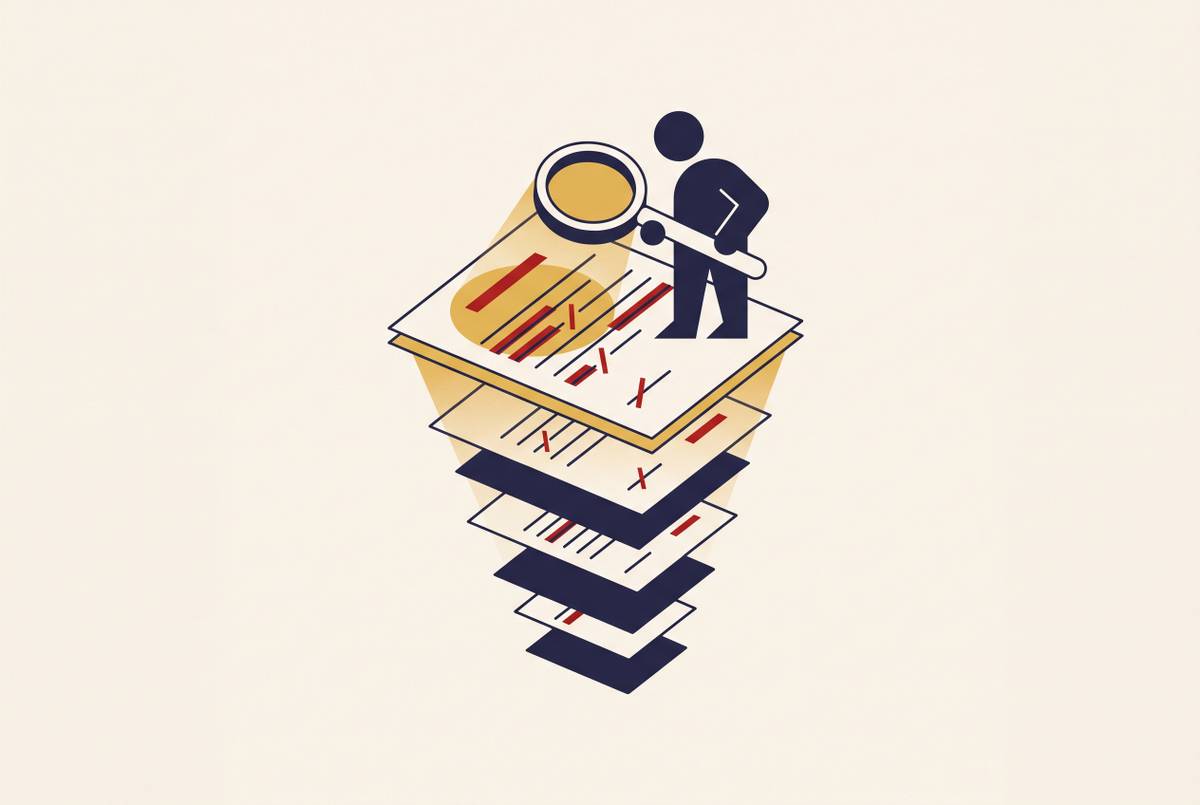
Every time someone attaches a file to an email, a new copy gets created in the recipient's inbox. That copy has no idea any other copy exists. Multiply that across a negotiation with three or four parties, each replying, editing, and forwarding, and each inbox becomes its own private archive of a slightly different draft lineage.
Here's the part that trips people up: Party A's last-sent version is not the same document as Party B's last-received version, not once Party C has also weighed in and sent something back. Courts have actually seen this play out in disputes over which version was signed, with both sides producing email archives that show different drafts as the "final" one. Nobody was lying. They were just each holding a different branch of the same tree.
The platform-escape problem makes this worse. A negotiation frequently starts inside a shared workspace, something clean and centralized, and then somewhere around round two someone emails a Word document instead. Maybe the counterparty isn't on the same platform. Maybe it's Friday at 5 p.m. and email is just faster. Either way, this is as much a change management failure as a technology one: the discipline of staying inside a single system tends to collapse the moment any friction shows up, and friction always shows up.
The cost isn't abstract. World Commerce & Contracting research puts the toll of poor contract management at roughly 9% of annual revenue for organizations, and version sprawl feeds directly into the missed obligations and stalled approvals driving that number. By round four of a multi-party negotiation, it's not unusual for the number of live document variants in circulation to exceed the number of parties actually negotiating. Which raises an obvious question: if there are more documents than there are people, who exactly is in charge of any of them?
Silent edits: how changes enter a document without anyone noticing
A silent edit is a change made without track changes turned on, sitting inside a paragraph that otherwise looks untouched, waiting for someone to either catch it or sign it. Most of the time nobody catches it until much later. Sometimes nobody catches it at all.
Nada Alnajafi, Lead Legal Ops and Sr. Corporate Counsel at Franklin Templeton and founder of Contract Nerds, has pointed out that regardless of intent, the effect of a hidden change can be enormous relative to the size of the edit itself. That distinction matters: most silent edits aren't sabotage, they're just someone opening a file, editing directly, saving, and sending, without realizing track changes was switched off somewhere along the way. Bad-faith hiding does happen. But treating every silent edit as a strategic maneuver misses the more common, and far more fixable, cause: plain human error.
Format conversion adds another layer of risk entirely. Converting a file from Word to PDF and back, or accepting and rejecting changes mid-conversion, can quietly drop content from the negotiation record without leaving a trace. As one legal commentary from montague.law puts it, a redline is only as trustworthy as its base, and if that base silently lost a sentence during conversion, every comparison built on top of it inherits the error. Standardizing on one format for the life of a negotiation isn't a nice-to-have. It's closer to a precondition for the whole exercise making sense.
Picture this: version one of a supply contract says invoices are payable within 45 days. Version two comes back from the supplier with that number changed, but no tracked edit shows it. A reviewer scans the document, sees clean formatting, sees nothing flagged, and moves on. The payment term just got renegotiated in silence, and it's locked into the contract that gets executed. Microsoft Word remains a widely used redlining tool across the industry, which means this isn't some rare edge case. It's close to a common condition for many negotiating teams.
Overwriting and the loss of negotiation history
The fix here is almost embarrassingly simple to state and consistently hard to enforce: never save over a version. Every draft that leaves a working session gets a number, v01, v02, v03, and the previous one gets archived rather than deleted.
The line for incrementing isn't "every time I hit save." It's exposure. The moment a draft has been seen by the client, the counterparty, or a reviewing partner, per montague.law, it's frozen. Iterate all you want inside your own working session. Transmission is what creates the obligation to preserve.
Why does this matter enough to build a whole discipline around it? Because a negotiation is, at bottom, a record of who proposed what and when, and disputes get fought over exactly that sequence. Montague Law describes an eight-figure holdback dispute that turned on a single word, "final," buried in a holdback clause. The party that could reconstruct precisely which draft introduced that word, and whose redline carried it forward, held a stronger hand than any argument about what everyone supposedly intended. If your file history is just one document that got overwritten five times, you don't have history. You have a guess.
In a multi-party negotiation, overwriting is even harder to police, because no single party controls a master copy. Any participant can save over their own file and send it along as though it's a natural continuation of the shared record, and nobody downstream has any way to know the difference.
There's a close cousin to this failure worth naming separately: the clean copy paired with an email describing the changes in prose instead of showing them as tracked edits. That's not version control. That asks the recipient to reconstruct the diff by hand and trust that the email actually captured everything, which, per montague.law, functions as a substitute for the actual record of changes rather than the record itself.
What happens when multiple parties edit simultaneously rather than sequentially
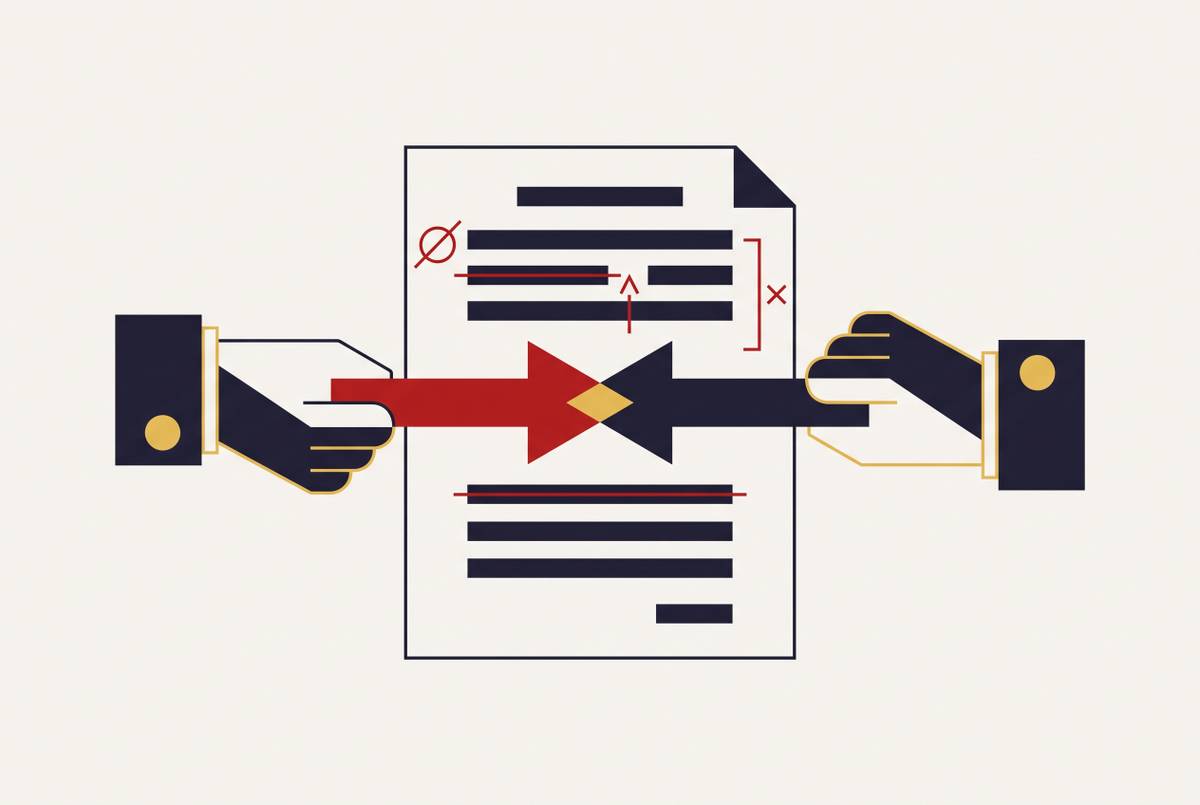
The structural fix sounds almost too obvious to write down: only one party should be redlining the document at any given moment. Everyone else gets a chance to review before adding their own edits. Simultaneous editing, where two parties are marking up the same draft at the same time without knowing it, produces conflicting revisions almost by design.
Tool behavior doesn't help much here either. Word's Compare feature does fine when there's a single author making changes, but it starts to strain under anything resembling a real multi-party negotiation. Google Docs version history can show who changed what and when, but reconciling conflicting edits from multiple parties still requires someone to sit down and work through the differences by hand. And that manual reconciliation step is exactly where things go missing, get silently overwritten, or quietly resolve in favor of whoever happened to be doing the merging.
Run the scenario with three parties. Party A redlines sections 3 and 7. Party B, with no idea A already has the document, simultaneously redlines sections 3 and 9. When the two versions get merged, whoever performs that merge effectively decides what happens to section 3, and the other party never finds out their language got overwritten. Nobody acted in bad faith. The process just had no queue.
That's the actual fix, and it has nothing to do with which software anyone uses: a defined turn order, with acknowledgment required before the document moves to the next party. One editor at a time, confirmed handoffs, no exceptions for urgency.
Executing the wrong version and what it legally locks in
Execution errors tend to start with something mundane: approval confusion. Reviewers stall because they genuinely can't confirm they're looking at the latest draft, and under enough deadline pressure, an outdated version gets routed for signature anyway.
The legal consequence isn't fuzzy at all, though. Under the ESIGN Act and UETA, an electronic signature binds the signer to the document exactly as it existed at the moment of signing, not as the parties believed it to be, not as it was discussed on a call the week before. Gowling WLG has noted that parties are held to the bargain they actually made, even where they misunderstood its legal effect or simply struck a bad deal, and courts grant relief only in narrow situations: where one side misled the other, making the contract voidable, or where the document plainly fails to reflect what both sides intended, opening the door to rectification. Neither exception covers "we signed the wrong file by accident."
A commonly cited illustrative scenario involves a hospital chain that signed off on outdated pricing terms with a pharmaceutical supplier, because legal reviewed a draft that hadn't yet incorporated negotiated pricing adjustments. The parties are not named, so treat it as illustrative rather than a citable incident, but the shape of the failure is worth sitting with regardless: the oversight reportedly cost the hospital group millions in overpayments, all traceable to one team reviewing a document that wasn't the current one.
Findability compounds all of this. When there's no clearly designated authoritative version, sitting in a clearly designated place, even a signatory acting in complete good faith has no reliable way to confirm what they're actually about to sign.
Metadata as a hidden layer of version control failure
Every contract file carries more than its visible text. Author names, tracked changes, timestamps, internal comment threads, fragments of clauses someone deleted three drafts ago, file history, document properties that still reference a completely different client or an old template. All of it travels with the file whether anyone remembers it's there or not.
That creates a genuine privilege problem. A comment thread that says something like "remove this, too risky" is a fairly ordinary internal note, right up until opposing counsel opens the file and reads it, at which point it's a privilege risk, per clio.com. Opposing counsel with the right eye can pull internal comments, earlier draft language that undercuts the current position, and the names and timeline of everyone who touched the document, according to miamidadebar.org. Whether such a disclosure constitutes a waiver depends on jurisdiction and circumstances. That's some comfort. It doesn't undo the fact that opposing counsel already read it.
Regulators have caught up to this, at least on paper. The State Bar of Texas Professional Ethics Committee requires lawyers to take "reasonable measures" to avoid transmitting confidential information hidden in metadata, including using "reasonably available technical means" to strip it out, per digitalcrisis.com. Alnajafi's guidance at Contract Nerds runs along similar lines: because contracts are iterative and frequently built from recycled templates, scrubbing drafts and templates before they leave the building should be routine, not an afterthought someone remembers occasionally.
Multi-party negotiations turn this into a layering problem. Every organization that touches the file adds its own sediment of embedded information, so a document that's passed through three companies can end up carrying internal commentary from all three, quietly nested inside a file that looks, on the surface, completely clean.
The discipline that actually prevents these failures
None of this requires exotic technology to fix. It requires discipline that most teams already know they should have and routinely don't enforce under deadline pressure.
Start with a single authoritative master. One environment holds the documents, the comments, the redlines, and the approvals, so every party is looking at the same live version instead of a personal copy of something that might be three rounds old. The moment a draft leaves a working session, it gets numbered, archived, and replaced. It never gets overwritten. That's not a suggestion, it's the whole mechanism holding everything else together.
Track changes stays on, for everyone, every time, verified before the file ever leaves the building. Internal review before external transmission is what catches the silent edit before it becomes someone else's problem, and counterparty acknowledgment of receipt, confirming exactly which version landed in their inbox, closes a loop that email alone simply cannot close on its own.
A single document format for the life of the negotiation eliminates the conversion errors that quietly eat tracked changes. Sequential editing, one party holding the document at a time, with the next party waiting on confirmed receipt before touching anything, removes the merge-conflict problem covered above almost entirely. And a version should always mean two files, not one: the clean draft, plus a redline showing every change measured against the base the recipient already has, per montague.law. Sending only one half of that pair is sending an incomplete version, even if it feels complete.
Negotiation playbooks help too, in a quieter way. Deciding in advance which terms are fixed positions, before the redlining even starts, concentrates scrutiny on the clauses carrying real risk, things like liability caps, indemnification, payment terms, termination rights, rather than treating every paragraph with identical suspicion. And metadata scrubbing belongs on that list as a standard pre-send step, not something someone remembers to do occasionally after a scare.
Legal review delays already sit near the top of every list of negotiation bottlenecks. The point of all this isn't to add another review round on top of an already slow process. It's to fix the structural leaks so the reviews that do happen are actually reviewing something stable.
What purpose-built tooling does that Word and email cannot
Word and email remain the dominant way this work actually gets done. The large majority of contract negotiators use Microsoft Word to redline, according to the poll Alnajafi cites at Contract Nerds, which means everything described above isn't some rare failure mode confined to unlucky teams. It's the norm, quietly baked into the default tools everyone already has open.
Word, on its own, has no concept of a single authoritative master. Every emailed attachment spins off a new copy with zero awareness that other copies exist. Compare works reasonably well for one author making changes over time, but it starts to buckle under genuine multi-party complexity. There's no automated metadata removal built in, no access controls, and no audit trail that survives once the file leaves the machine it was edited on.
Purpose-built CLM platforms close a lot of these gaps directly. A centralized repository keeps every version, comment, and redline in one environment, so there's no parallel universe of email chains each holding a different draft. Access controls limit who can view or edit a given version, which cuts off the unauthorized-overwrite problem at the source. An audit trail records who changed what and when, in a form that persists and can't just be typed over. Metadata management becomes automatic and systematic rather than dependent on one person remembering to scrub a file before hitting send. Editing sequences and approval routing get built into the workflow itself, instead of relying on everyone's inbox discipline holding up under deadline pressure.
None of that means one tool wins in every situation. Concord's 2026 workflow guide frames it as genuinely context-dependent: desktop Word still makes sense for high-stakes external negotiations that demand maximum markup control, or where outside counsel expects a traditional back-and-forth. Google Docs suits speed and internal collaboration well. Integrated CLM platforms earn their keep with mixed teams juggling compliance requirements across several parties at once. The tool matters less than the discipline wrapped around it, though a decent tool at least makes that discipline easier to keep.