Redlining Etiquette in High-Stakes Commercial Contracts
Counterparties read your redline tone as much as your edits—and that matters for deal speed.
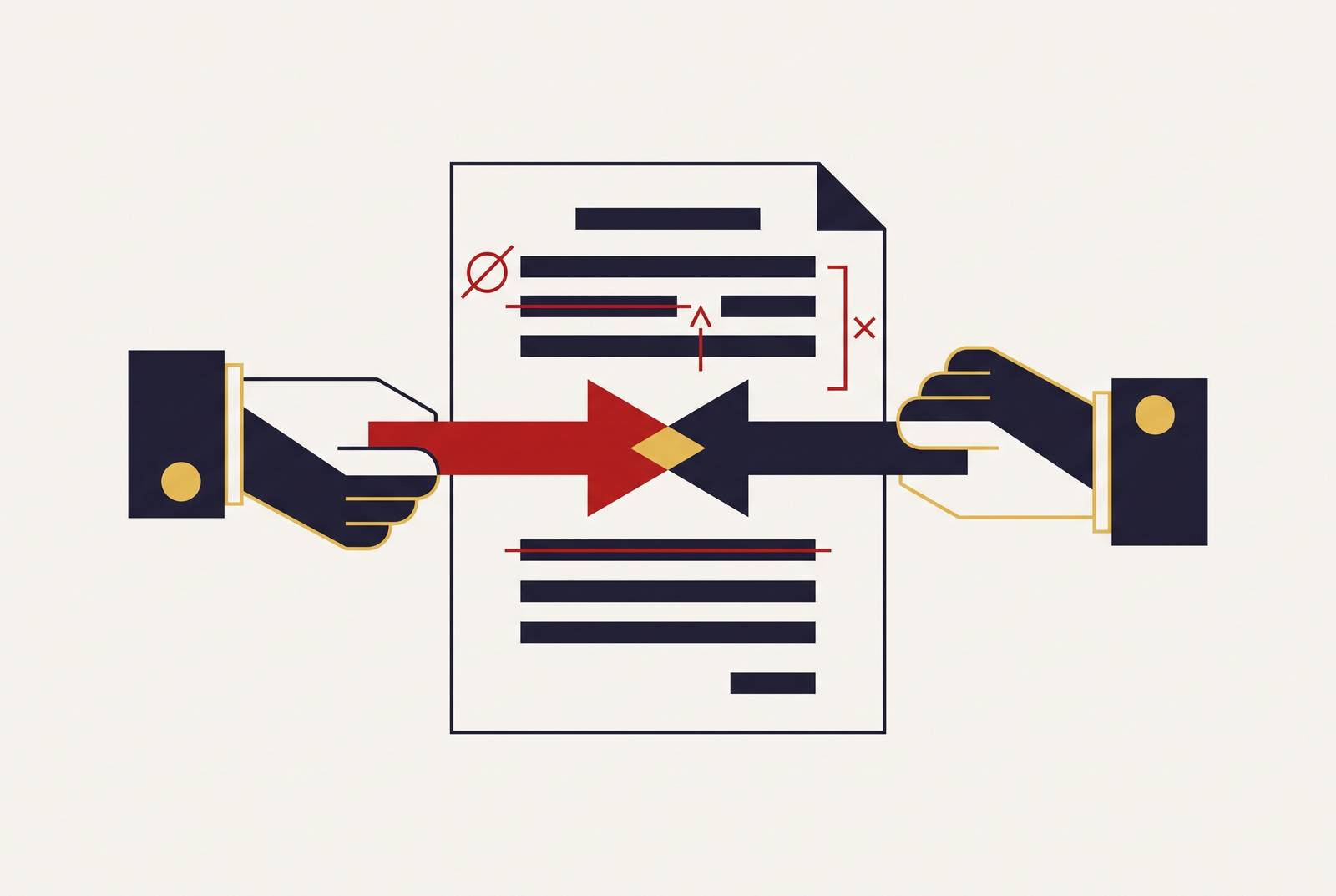
How you redline a contract matters as much as what you redline. The conventions around markup, comment tone, and negotiation sequencing either build momentum toward a signed deal or quietly poison it, and most of the damage happens in places nobody's watching closely enough.
Redlining, in the strict sense, is the act of marking up the document itself: strikethroughs, insertions, and comment bubbles make up its basic vocabulary. This is distinct from the broader negotiation happening on calls and in emails, though the two are supposed to work together. This account kept returning to the idea because it seemed too simple at first: Nada Alnajafi, founder of Contract Nerds and author of a book on the subject, frames redlines as a written record that supplements the conversation. The more closely actual redlined drafts were examined, the more it held up. They tell the other side what you're thinking, wanting, reconsidering, ready to reject, willing to accept, all the things the original contract language never says on its own. Tone, volume, and selectivity of markup carry meaning independent of the substance being argued, the same way crossed arms say something a spoken sentence doesn't. Get that wrong and the costs show up as slower cycles, damaged trust, and reputational friction with counterparties who remember how a negotiation felt long after they've forgotten the clause numbers. Internally, the damage runs deeper still: when a company's own sales and customer success teams start viewing legal's redlines as obstructionist, they begin routing around legal entirely, which defeats the point of having a legal review process in the first place.
Why the median deal takes 42 days to close and redlining discipline is part of the answer
The median end-to-end contract cycle sits at 42 days as of 2025, according to procurement research on negotiation timelines. That number reflects bottlenecks stacked on bottlenecks: drafting delays, redlining rounds, internal approval chains that move at the speed of whoever's slowest to check their inbox.
Most people blame the lawyers for that number, and that view runs backwards, though it took some digging through how associates actually learn the craft to be convinced of it. Lawyers learn to redline independently, often self-taught on the job, picking up habits from whichever mentor happened to train them, at whatever point in their career that training occurred. Nobody sits new associates down for a formal course in markup etiquette. The result is a profession full of practitioners who each believe, with total sincerity, that their approach is correct, even when it's wildly inconsistent with the approach sitting across the table. That inconsistency isn't a quirky footnote. It shows up as longer closing cycles, weaker negotiating leverage, eroded trust, and either lost revenue or bloated legal spend, depending on which side of the deal absorbs the cost.
Deloitte research puts the erosion from contract inefficiencies at up to 9% of total contract value across organizations. That figure implicates the process itself, separate from any single lawyer having a bad week. Research finds legal teams spending 60 to 80% of their time on routine contract review tasks, which raises an uncomfortable question without a clean answer: are sloppy redline habits the bottleneck, or just the most visible symptom of a review process that was never built for speed? Both, honestly. The habits are the part any individual lawyer can fix by Monday morning, so that's where this piece is staying.
Why Microsoft Word Track Changes is still the universal medium and what that imposes on everyone
A poll of contracts professionals found that roughly 92% prefer exchanging commercial contract redlines through Microsoft Word's Track Changes rather than PDF markup. That's a striking number in an era when practically every other business function has migrated to something cloud-native and collaborative, and it remained puzzling until closer examination revealed why the incentive never materialized.
Here's why Word hasn't budged: a redline is one of the few contract activities that requires cooperation from someone who doesn't work for the sending organization and never will. Nobody can mandate that opposing counsel adopt a preferred software. That external dependency locks the whole industry into the one format everybody already has installed, whether they like it or not, and no procurement clause or software rollout is changing that anytime soon.
That shared format imposes real constraints. Every edit is visible and attributed once the document leaves the sender's hands, since there's no private scratch pad after send. Comment boxes are small, carry no formal structure, and yet somehow they're the primary venue where actual persuasion happens. Track Changes can also be hidden from view without ever being removed from the file, a hazard that cuts both ways for sender and receiver alike (more on that under metadata, further down). The upshot: a counterparty's experience of the redlines is shaped as much by how the sender used Word as by what was actually changed. That's the hinge the rest of this piece turns on.
The single most consequential habit: always explain your redlines in the comment box
Alnajafi's Rule #1, stated plainly, is that a redline should always come with a comment explaining why the change is being proposed. Skip that step and the counterparty is left guessing, negotiating with itself about how to respond, and that internal guessing game rarely resolves in the sender's favor. People resist change they don't understand the reason for; that's basic human wiring more than a legal principle, and basic experience with persuasion backs it up: people are more receptive when a compelling reason accompanies the ask. Silence in the comment box defaults to rejection more often than it earns acceptance.
The comment box functions as a closing argument, not a verdict. Writing "Rejected" or "We cannot agree" communicates nothing and moves nothing forward. A comment worth writing explains why the proposed language actually serves both parties, strategizes the framing, and reads like client advocacy compressed into two or three sentences.
One habit worth adopting, and it took watching a few redline exchanges go sideways to see why it works: write the comment before making the edit. Forcing the explanation to come first means the reason for the change has to be articulated clearly before it gets committed to the markup. It's a small sequencing trick, but it catches a surprising number of redlines that, on reflection, don't have a good reason behind them at all.
How to triage a draft so the high-stakes clauses get the attention they deserve
Every clause carries different risk, so spreading redline effort evenly across the whole document is itself a mistake, and arguably the more common one than under-marking anything. Commercial agreements have a handful of clauses where a weak term costs the organization real money or real exposure: limitation of liability and its cap, indemnification scope, IP ownership and license grants, termination and renewal rights, confidentiality, governing law and dispute resolution, payment terms. An uncapped indemnity, for instance, can expose an organization to losses far larger than the value of the contract itself. Everything else on the page is largely housekeeping by comparison, and treating a notice-address clause with the same intensity as an indemnification cap wastes attention the negotiation doesn't have to spare.
Excessive redlining signals a lack of judgment just as loudly as it signals distrust of the other side, and it's the more common failure of the two. A document washed entirely in red communicates noise before the counterparty has read a single substantive word. The practical fix is sequencing: address the deal-breakers first, since resolving those early keeps the whole cycle pointed toward an actual closing date instead of drifting. Within the markup itself, annotate clearly which changes are firm positions and which are just flagged for discussion, so the counterparty isn't left reverse-engineering which battles actually matter.
Signaling firmness and flexibility without saying so explicitly
Every redline signals something about how badly the sender wants it, whether that signal was intended or not, and the counterparty reads it regardless. Silence, in particular, gets misread more than any other move in this list, which isn't obvious until you've watched a deal stall over a clause nobody actually objected to.
Some of that signaling can be deliberate. Targeted, surgical edits on the clauses that matter most, paired with a light touch everywhere else, communicate hierarchy without a single word of explanation. A fully rewritten clause signals that the existing draft is unacceptable at the structural level, not merely in its wording, so that move should stay rare; use it too often and it stops meaning anything. Even silence can be tactical: choosing not to comment on a counterparty's proposed change can read as implicit acceptance, or, in a negotiation with real power asymmetry, as a quiet display of leverage.
Calibration cuts both ways, though. Accept too many minor terms early in the process and the firm positions start looking negotiable too, an impression that's brutally hard to walk back once it's set. Push back on everything with equal intensity, and the counterparty has no entry point for movement anywhere, which stalls the negotiation just as effectively as caving does. The practical middle ground: reserve unambiguous language like "this provision is non-negotiable for us because" for the two or three terms that genuinely deserve it, and let everything else breathe.
What pages washed in red actually communicate about the party sending them
Excessive strikeouts, confrontational comment language, and generally messy markup speak before the counterparty has read a word of substance, as commentary on high-stakes document negotiation consistently notes. Aggressive markup tends to signal one of three things, and none of them are good: distrust of the drafter regardless of whether the underlying concern is legitimate, inexperience about what actually matters in the document, or a preview of a difficult counterpart. Any one of those impressions can shift the other side's posture before a single phone call happens.
Tone inside the comment box matters just as much as tone in the room. Confrontational or emotional language undermines the entire persuasive function of a comment, because the goal is moving the counterparty toward agreement; an argument that only exists to be won on paper satisfies nobody once the deal is signed. The professional standard worth aiming for is neutral, reasoned, and explanatory, a comment that reads as fair even when the underlying position is firm. Redlining, in other words, tests more than legal accuracy. Poor formatting, aggressive edits, and unprofessional comment language can derail an otherwise sound negotiation or damage a business relationship meant to outlast this one deal by years.
A useful gut check, one that catches more problems than any formal review: would the comment survive being said out loud, to the counterparty's face, in a normal tone of voice? If the answer is no, it needs a rewrite before it goes anywhere near "send."
Getting internal alignment before the redlines leave your organization
One of the more common failure modes: legal sends out redlines that reflect legal's own priorities without ever confirming which terms the business stakeholders on the actual deal consider critical. It's an easy trap, since legal is the team physically marking up the document, but the document isn't legal's deal to win or lose.
The fix is a pre-transmission check-in with the business side, verifying which markups are genuine must-haves versus which are nice-to-haves that could be traded away without real cost. That distinction shapes which comments carry weight in the negotiation and which should get dropped or softened before the document ever leaves the building.
Internal consensus produces something counterparties notice even when nobody points it out directly: a unified front. A second round of redlines that reverses positions taken in the first round signals internal disorder, and sophisticated counterparties read that as a crack to push on, weakening negotiating credibility for the rest of the deal. A second set of eyes reviewing the document before it goes out catches substantive errors, sure, but it also catches tone problems that the original drafter, deep in the clause-by-clause weeds, has stopped being able to see. Organizations with documented primary, fallback, and walk-away positions for their highest-stakes clauses move through this internal alignment step considerably faster, as negotiation guidance on contract playbooks consistently notes, because the hard conversation already happened once, in advance, away from the pressure of a live deal clock.
Preserving negotiation history: why you respond to redlines rather than overwrite them
There's a strong instinct, especially under deadline pressure, to just accept or delete a counterparty's edits and rewrite the clause clean. Resist that instinct; it destroys something with real value, which is the negotiation history sitting inside the tracked changes.
That history holds the sequence of positions, meaning who proposed what and in which round, evidence that a term was already agreed and shouldn't be reopened, and context for understanding why the final executed language reads the way it does. That context matters both at signing and later if a dispute ever surfaces. Overwrite the history and none of it survives; there is no undo button once the clean version has been sent and the old draft archived somewhere nobody will think to check again.
The better practice: respond to a counterparty's markup with counter-comments, keep their edits visible in the document until a term is genuinely resolved, and only accept or reject once that resolution has actually happened. After one or two rounds of written redlines, Contract Nerds guidance suggests moving the conversation to a call, using the latest draft on a shared screen as the reference point rather than something anyone tries to edit live without structure. That sequencing does real work: written rounds establish where each side stands, and the call resolves the contested terms far more efficiently once both parties already know exactly where the real gaps sit.
Version control and the metadata risk that careful redliners still overlook
Version chaos, where a folder ends up holding several files named "final" and "revised" and nobody's sure which one is authoritative, is a well-known operational hazard. The fix is almost embarrassingly simple in principle: agree on a base version before markup starts, label every subsequent version clearly with date and round number, and maintain one single source of truth everyone on the team can point to without a debate.
The metadata risk is subtler, and it gets missed more often, even by lawyers who consider themselves careful — the full depth of it becomes clear only after digging through what "No Markup" view actually does versus what it appears to do. Word files carry hidden data: author names, full tracked-changes history, timestamps, fragments of clauses deleted three rounds ago, and comments that may have candidly explained an internal negotiating strategy. Switching the view to "No Markup" does nothing to clean or finalize the document; it only hides the markup visually while the underlying data stays fully intact and fully readable by whoever opens the file next. Careful redliners get this part wrong most often: they mistake a clean view for a clean file, and the two are not the same thing.
The correct procedure before sending anything: File, then Info, then Check for Issues, then Inspect Document, to surface whatever hidden information the file is carrying. Do that on a copy, since Microsoft itself warns that removed data can't always be restored once it's gone. Accepting all tracked changes, then simply turning off Track Changes, leaves comments, revision history, and author metadata fully intact; it just makes the mess less visible on the surface. Exposed metadata can reveal negotiating strategy discussed candidly in a comment, positions abandoned two rounds back, or internal author identities, any of which a sophisticated counterparty could put to use in ways the sending organization never intended.
How negotiation playbooks turn etiquette discipline into an organizational capability
A negotiation playbook, in practical terms, is a documented set of standard positions, acceptable fallbacks, and walk-away points for the clauses an organization negotiates most often. It sounds bureaucratic until it's the thing saving a junior associate from having to improvise a position on limitation of liability under deadline pressure, with a partner waiting on the other end of a Slack message.
Playbooks support redlining etiquette directly. They answer the must-have versus nice-to-have question before a deal even starts, which means the internal alignment described earlier happens faster because half the conversation already took place months ago. They let junior counsel defend a position with actual reasoning behind it rather than a shrug and a guess, because the negotiation rationale is already written down somewhere they can reference.
A well-built playbook is typically tiered: a primary position, a Fallback 1, a Fallback 2, and a walk-away point, giving the negotiator room to maneuver before anything has to escalate to someone more senior. That tiering matters most on third-party paper, meaning contracts drafted by the other side rather than the sending organization's own template. According to Icertis' 2026 State of Contracting Report, a large majority of legal operations departments now track what percentage of their contracts run on third-party paper, and it's exactly those unfamiliar document structures where reviewers need the playbook most, since there's no home-field advantage to fall back on.
The etiquette connection closes the loop: a negotiator working from a clear playbook writes more confident comments, because the reasoning behind the ask is already settled before the cursor hits the comment box. That conviction reads in the markup itself, whether anyone names it explicitly or not. Tools that give legal and business teams shared visibility into negotiation positions, including platforms built around playbook logic embedded directly into the drafting and review workflow, close the gap between the playbook sitting in a binder somewhere and the actual redlines going out the door on a Tuesday afternoon under deadline pressure.