Counterpart Negotiation Tactics Used by Outside Counsel
Outside counsel use anchoring, deadlines, and information gaps to win negotiations.
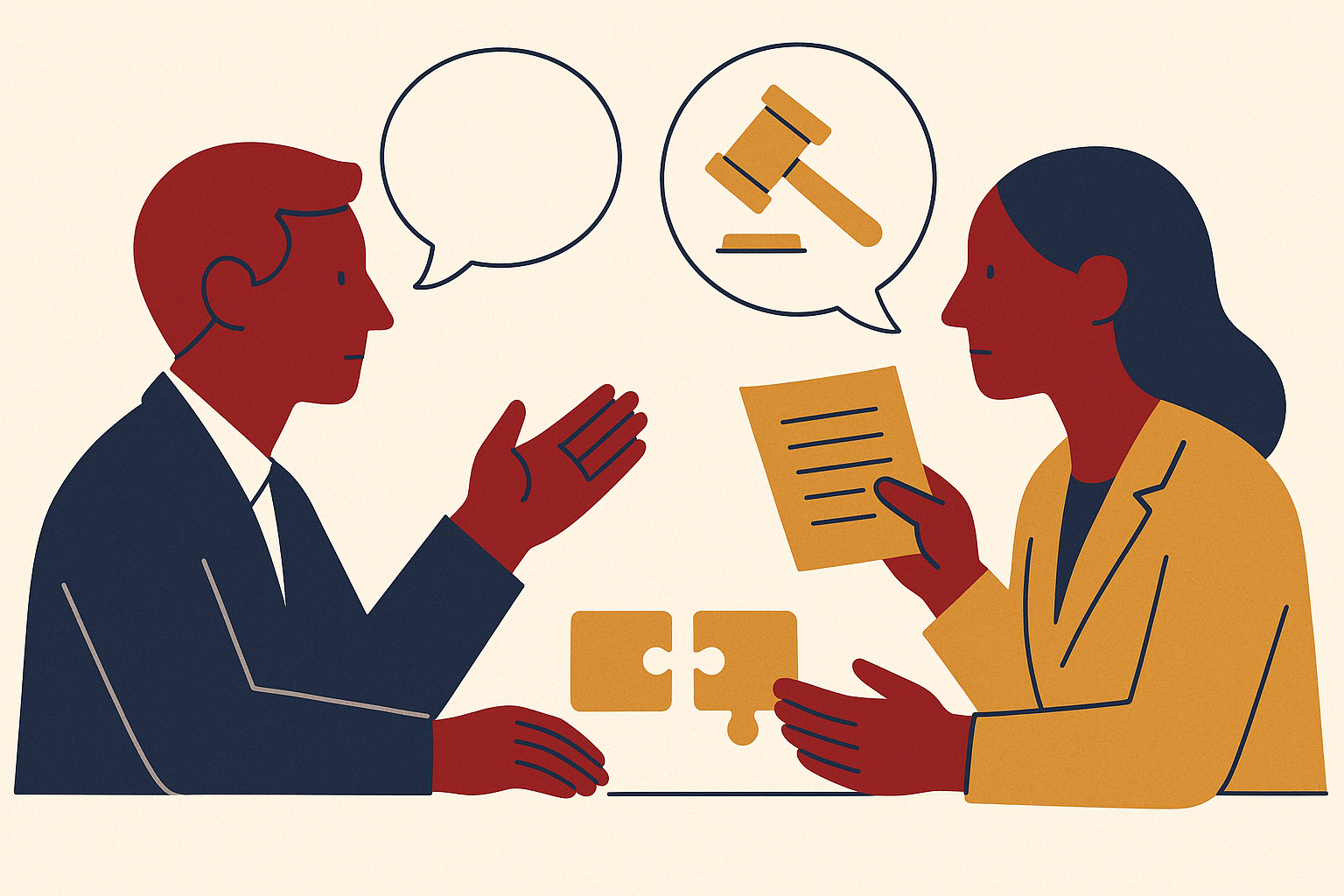
Outside counsel walk into most negotiations with a built-in edge, and that edge comes from tactics, not talent alone. This piece breaks down how anchoring, deadline pressure, information asymmetry, team dynamics, and concession design work mechanically, and what a prepared counterpart does to counter each one.
Why outside counsel enter negotiations with a structural advantage
Outside counsel show up as repeat players with a playbook they have run many times before, while the person across the table, whether in-house counsel or opposing counsel, is often negotiating that particular matter for the first and only time. Legal training itself produces this posture. Law schools teach students to argue a position, anticipate the other side's counterargument, and protect a client's interest above nearly everything else, and those instincts carry straight into how a lawyer sits down at a negotiating table.
The information gap compounds the problem. Outside counsel typically arrive with internal cost data, rate history, and a clear read on market positioning already assembled. The in-house team on the other side usually brings budget limits and a sense of the relationship's history, which is a different kind of resource and a weaker one in this context. Information is power in a negotiation, and the side holding better information tends to walk away with the better result.
Specialization deepens the gap further. Attorneys who practice in a given area tend to see each other repeatedly across different matters, because the pool of specialized counsel in most practice areas is small. That repetition builds a kind of pattern recognition about how counterparts think and react that a person who negotiates once a year simply has no way to acquire.
None of this amounts to bad faith on outside counsel's part. It is the ordinary outcome of specialization and repeated practice, and recognizing that is the first step toward neutralizing it. The tactics covered in the rest of this piece are not improvised in the moment. They are practiced moves that work because the other side rarely sees them coming.
How anchoring shapes the entire negotiation before positions harden
The first number spoken in a negotiation does far more work than its face value suggests. It sets a reference point that both sides keep returning to, even after that number has been challenged or walked back.
An opening offer functions as a psychological anchor, and it often represents close to the best outcome the anchoring party can realistically hope for. Outside counsel use this on purpose. A six-figure demand on a case that is, by any reasonable market measure, worth five figures is rarely issued because counsel expects it to be accepted. It is issued because it drags the eventual midpoint upward, toward a number far more favorable than the case's actual value would justify.
Research by Leigh Thompson backs the practice up directly: negotiators who make the first offer are not harmed by doing so, and those who anchor first tend to come out ahead. Outside counsel know this finding and build their opening strategy around it. The anchor also changes how later concessions feel. When an opening demand or a published rate is set high enough, any concession that follows feels like a win to the counterpart, even though the final outcome may still sit well above a fair market position. In rate negotiations specifically, outside counsel anchor to internal cost structures and market framing that the counterpart has not checked against any outside benchmark.
The counter to this starts with the counter-anchor. An ambitious opening position holds up better when it is defensible and framed around underlying interests. A counterpart who re-anchors immediately, using a benchmarked figure instead of accepting the other side's number as the starting point, keeps that number from becoming the baseline for the rest of the conversation. Framing a counter-anchor as "here is the reasoning behind this figure," rather than simply stating a different number, invites a conversation about the logic behind the position instead of forcing either side to abandon ground outright, and that kind of framing tends to produce real movement.
Artificial deadlines manufacture urgency that is not always real
A deadline attached to an offer is frequently a negotiation device rather than an operational fact, and accepting it without question is one of the most common and costly mistakes a counterpart can make. One side imposes a real or invented deadline specifically to force agreement before the other party can regroup, check a benchmark, or consult stakeholders who might push back on the terms.
Patience functions as one of the most effective tools available in a negotiation. Figuring out who actually faces time pressure, and who is simply claiming to, is a central leverage question in almost every deal or settlement. Outside counsel may frame urgency procedurally, pointing to an internal meeting or a filing date, or they may frame it commercially, as a limited-time offer on rates or on settlement terms. Either framing produces the same effect: it shrinks the time the counterpart has to think clearly.
The strongest response is to ask the deadline a direct question: what operational consequence follows if the date passes, and what specifically changes once it does? A real deadline has a specific, concrete answer to that question. A tactical one usually does not, and the vagueness of the answer tells the counterpart most of what they need to know. It also helps to resist letting the other side dictate the pace of the conversation. If a team needs a break to confer or verify a claim, taking that break costs nothing and often reveals how real the stated urgency actually was. Patience also signals a credible willingness to take a matter all the way through trial rather than settle under pressure, and litigators who can hold that signal alongside a genuine interest in settling, running both tracks at once, hold more leverage than a negotiator who looks rushed.
Maintaining and closing the information edge
Most negotiations fall short of what a counterpart hoped for because the counterpart pushes back without data to support the pushback. That leaves outside counsel's framing of costs, risks, and market norms standing largely unchallenged through the whole conversation.
Outside counsel generally arrive with rate structures, matter cost data, and market positioning already organized well before the conversation starts. In-house teams typically respond with budget history and the weight of the existing relationship, and those are not equivalent resources when the subject is a specific rate or a specific settlement number. In litigation settlement, the information edge runs through a different channel: knowing an opposing counsel's track record, whether they tend to settle or tend to litigate every issue to the end, tells a negotiator whether the other side still has room to move or has already reached its floor.
One common variant of this tactic is the "snow job," where a counterpart gets buried in facts and figures until the actual point at issue gets lost in the volume. The direct counter is to ask what in everything just presented actually matters to the decision at hand. Effective negotiators also tend to start by gathering information rather than arguing a position outright, building some rapport, asking open-ended questions, and probing the other side's real goals and constraints before putting their own cards on the table.
Preparation itself is a form of information gathering. Knowing a walk-away point, a client's actual priorities, the strengths and weaknesses of the position being argued, and the alternatives available if no deal gets reached gives a counterpart the specific data points needed to resist outside counsel's framing and push back on it directly. The landscape is shifting somewhat in the counterpart's favor here too. Litigation analytics platforms and contract benchmarking tools are starting to give counterparts access to market data that, until fairly recently, only well-resourced outside counsel could assemble. That access is narrowing the structural information gap described earlier in this piece, even if it has not closed it.
Good cop/bad cop and divide-and-conquer tactics exploit team and multi-party dynamics
Outside counsel also use the shape of a negotiating team, or the number of parties at the table, to create pressure that seems to come from inside the counterpart's own ranks. Two distinct tactics share this same underlying logic: both exploit structure.
Good cop/bad cop pairs one negotiator who takes an aggressive, uncompromising stance with a second who adopts a conciliatory, reasonable tone. The "bad cop" generates pressure and anxiety, and the "good cop" then offers what looks like relief, making agreement to terms the counterpart might otherwise resist feel like the safe choice. The tactic loses most of its force the moment a counterpart recognizes the pattern and names it out loud, exposing the structure so it can no longer work in the background.
In matters with multiple defendants or multiple parties, outside counsel sometimes pursue a divide-and-conquer approach instead, settling with individual parties one at a time. Each individual settlement raises the pressure on whichever parties remain, making a holdout feel isolated rather than aligned with others who share the same interest, and the result can be more favorable to outside counsel's client than negotiating with every party together would have been. The direct counter is coordination among parties who share common ground: aligned parties who negotiate collectively hold more leverage than parties who get picked off one at a time.
Both tactics also respond to the same discipline, which is staying focused on the issues and the merits of the case rather than on the personality sitting across the table. A "bad cop" persona loses much of its effect when the counterpart declines to engage with the performance and keeps redirecting every exchange back to substance. Rapport with the other side carries strategic value here too, not just social value. A working relationship with opposing counsel tends to pay off across multiple matters over time, while damaging that relationship in one negotiation can make the same counsel reluctant to negotiate in good faith the next time the two sides meet.
Concession design and the midpoint rule create the illusion of a fair outcome
A well-built opening position does more than set up a favorable number. It gives the counterpart enough room to feel they negotiated well, while keeping the eventual outcome inside a range outside counsel decided on well before the conversation started.
In mediation and settlement work, parties commonly set the midpoint between two positions as the reference point. Every number a counterpart offers tells outside counsel where the halfway point between that figure and the prior position will land, and outside counsel who understand this adjust their own anchors with that midpoint already in mind. Building extra room to move into an opening position is a deliberate design choice: concessions get staged carefully so the counterpart feels real progress is happening, even when the final destination was mapped out from the very first offer.
A well-designed concession sequence keeps outside counsel from giving up value they did not need to give up. The concessions a counterpart sees are being managed just as carefully as the opening number was. The positional bargaining trap uses strong, absolute language like "I will never settle for less than X" to tie a party to a fixed position rather than to the actual merits of the case, and always-or-never phrasing is a reliable sign that a negotiator has slipped from negotiating on the merits into negotiating on pride.
The counter runs through three habits. First, treat nothing as resolved until everything is resolved, rather than negotiating issues one at a time, because conceding early on a low-priority issue leaves nothing left to trade once the issues that actually matter come up. Second, keep a written negotiation playbook, updated after each round, that tracks the landing zone and the walk-away point for every issue on the table, so staged concessions from the other side cannot quietly pull the conversation away from what matters most. Third, ground every position in objective criteria, market value, precedent, expert opinion, jury verdict research, so that the sense of a "fair deal" comes from a standard that can be checked independently rather than from whatever feeling outside counsel's concession design was built to produce. A counterpart who does all three has addressed, in a systematic way, every tactic this piece has described.
Where outside counsel's tactics run into ethical limits
The playbook described above has real boundaries, and those boundaries matter both as a constraint on outside counsel and as a tool the counterpart can use. ABA Model Rule 4.1 bars attorneys from knowingly making false statements of material fact, but that rule exists alongside ordinary negotiation "puffing," which the rules permit. Most contested behavior in practice sits right on the boundary between the two.
Rule 8.4(c) defines professional misconduct to include dishonesty, fraud, deceit, or misrepresentation, and some routine negotiation behavior, including exaggerated claims about what terms a client would actually accept or where a true reservation price sits, comes uncomfortably close to that line. Self-reported data on attorney behavior shows that misrepresentation in negotiation does not always serve a calculated client interest. Some of it comes from unchecked competitiveness, and some comes from simple ignorance of where the ethical rules actually draw the line, meaning not every aggressive tactic a counterpart encounters was chosen deliberately.
There is also a performance cost to this behavior that cuts against the idea that aggression always pays off. Attorneys who rely on unethical or aggressive negotiating tactics have been found to show diminished cognitive performance, less creativity, and weaker professional outcomes compared with peers who negotiate on the merits. For the counterpart, the practical use of all this is straightforward: when a tactic looks like it has crossed from permitted advocacy into outright misrepresentation, naming that calmly and specifically changes the dynamic of the room in a way no counter-tactic from this piece can match on its own.
Sources
- Dealmaking and the Anchoring Effect in Negotiations
- Anchoring in Negotiation: Mastering the First Offer
- Anchoring Bias in Negotiation: Should You Make a Single Offer or a Range? - PON - Program on Negotiation at Harvard Law School
- 10 Hard-Bargaining Tactics to Watch Out for in a Negotiation
- Dealing with dirty negotiation tricks: Artificial Deadlines
- Good Cop/Bad Cop
- Negotiation Team Dynamics: The Divide-and-Conquer Strategy - PON - Program on Negotiation at Harvard Law School
- Four Strategies for Making Concessions